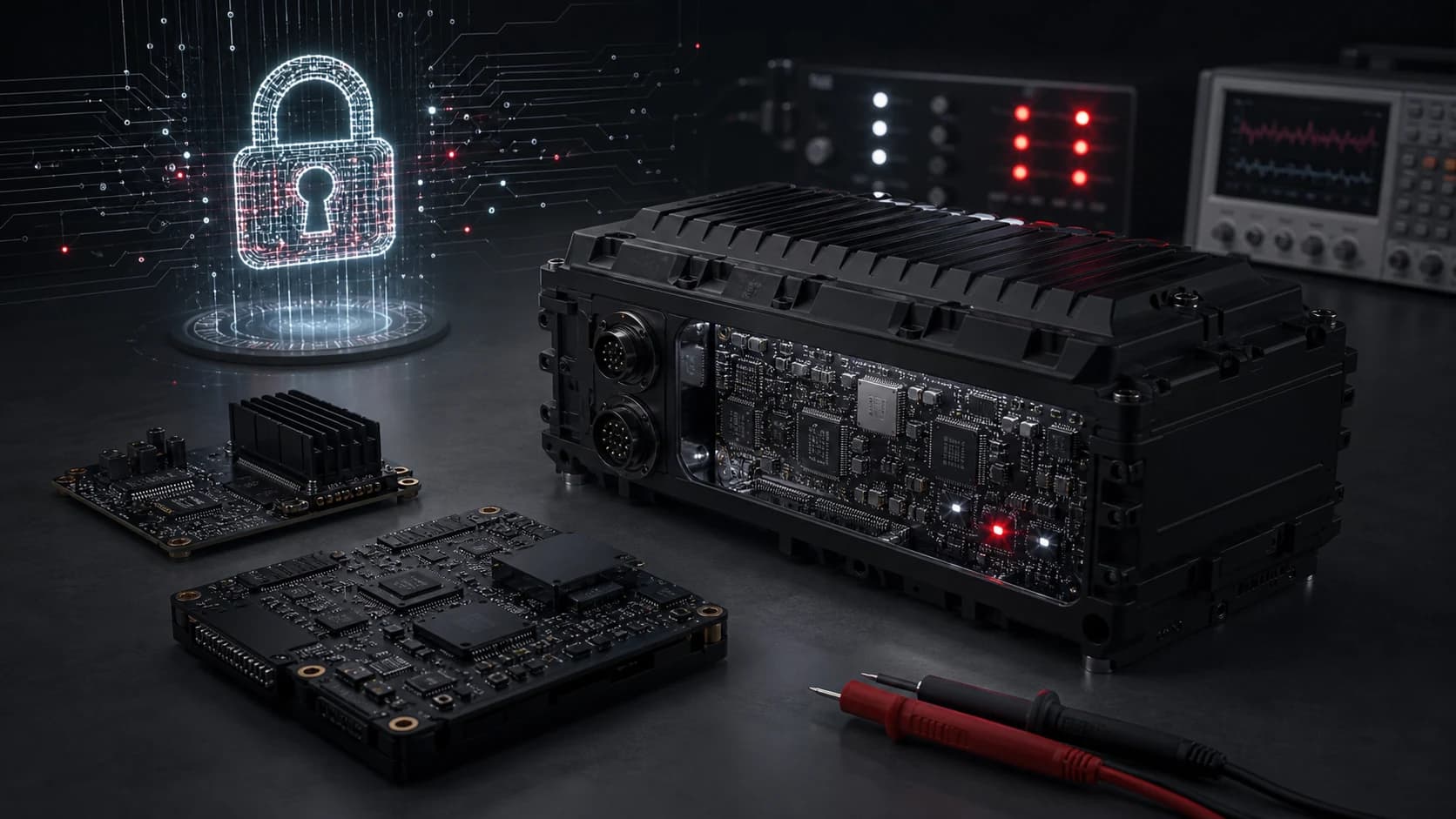
Embedded system security is the set of technical disciplines that protect the reliable operation of electronic control units, mission computers, sensor modules and communications devices used in defense platforms. Embedded systems often operate with limited processing resources, long lifecycles, harsh environmental conditions and mission-critical responsibilities. Security must therefore be a design requirement from the beginning, not a feature added at the end.
Why it is critical
In defense systems, embedded software may manage power, sensor acquisition, motion control, data transfer and fault diagnosis. A security weakness at this layer can create not only data loss but also mission interruption and reliability risk. Embedded system security sits at the intersection of cybersecurity and system safety.
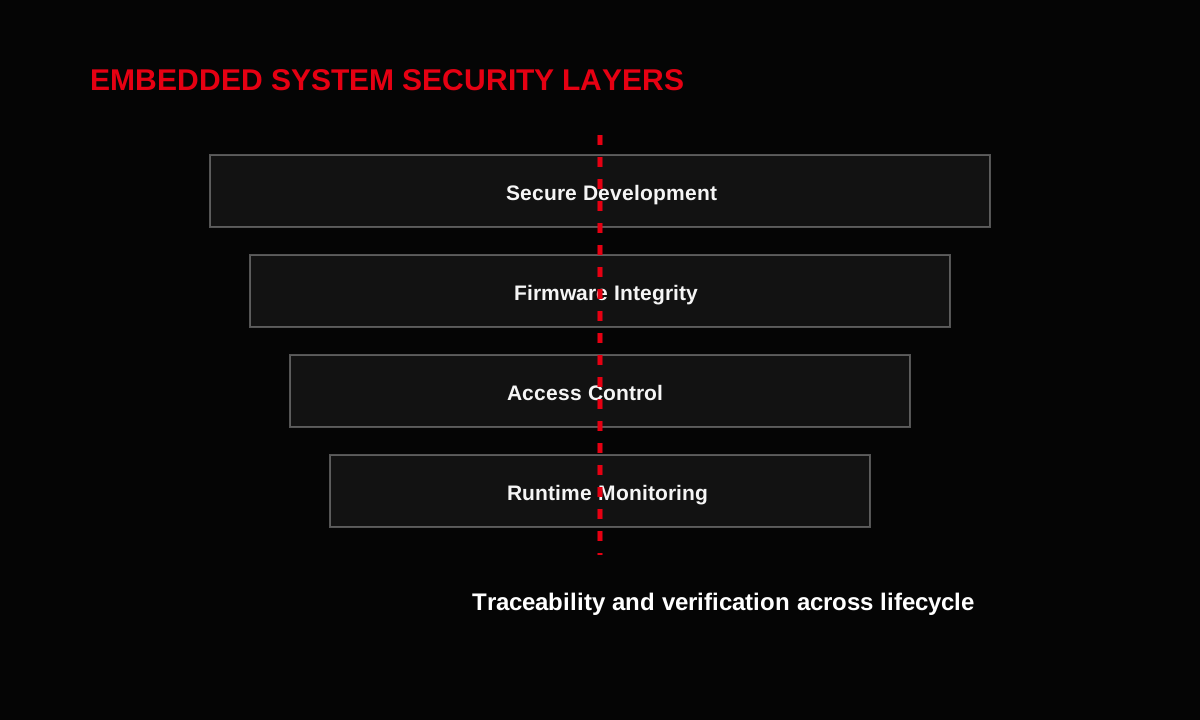
Core security layers
A secure development lifecycle begins with threat modeling, code review, dependency control and verification testing. Firmware integrity aims to ensure that the device runs the expected software. Access control prevents unauthorized use of maintenance and update interfaces. Runtime monitoring helps record abnormal behavior and supports fault analysis.
Lifecycle approach
Embedded security is not solved only during development. Production, serial-number control, configuration management, field updates, maintenance and decommissioning must be included in the security plan. For defense customers, the key question is whether the system can remain controlled and traceable over years of service. Technical documentation and change management are therefore part of the security architecture.
- Secure boot and firmware integrity
- Authorized maintenance and update processes
- Logging, fault diagnosis and event traceability
- Control of supply-chain components
Content boundaries
It is not appropriate to publish actionable exploitation methods, bypass techniques or vulnerability details in this area. Institutional blog language should focus on secure development, verification, resilience, lifecycle management and risk reduction. This creates technical confidence while preserving security responsibility.
In short, embedded system security is an inseparable part of quality and mission reliability in defense electronics. A secure system is not only protected against external attack; it is traceable, update-controlled and manageable throughout its field life.