
Electronic warfare is the set of technical disciplines that manage the impact of the electromagnetic spectrum on mission success. Radar, communications, data links, navigation and sensor systems are all directly connected to the spectrum. In modern defense architecture, electronic warfare is therefore not an isolated specialty; it is a central capability within platform design, mission planning and systems integration.
Conceptual framework
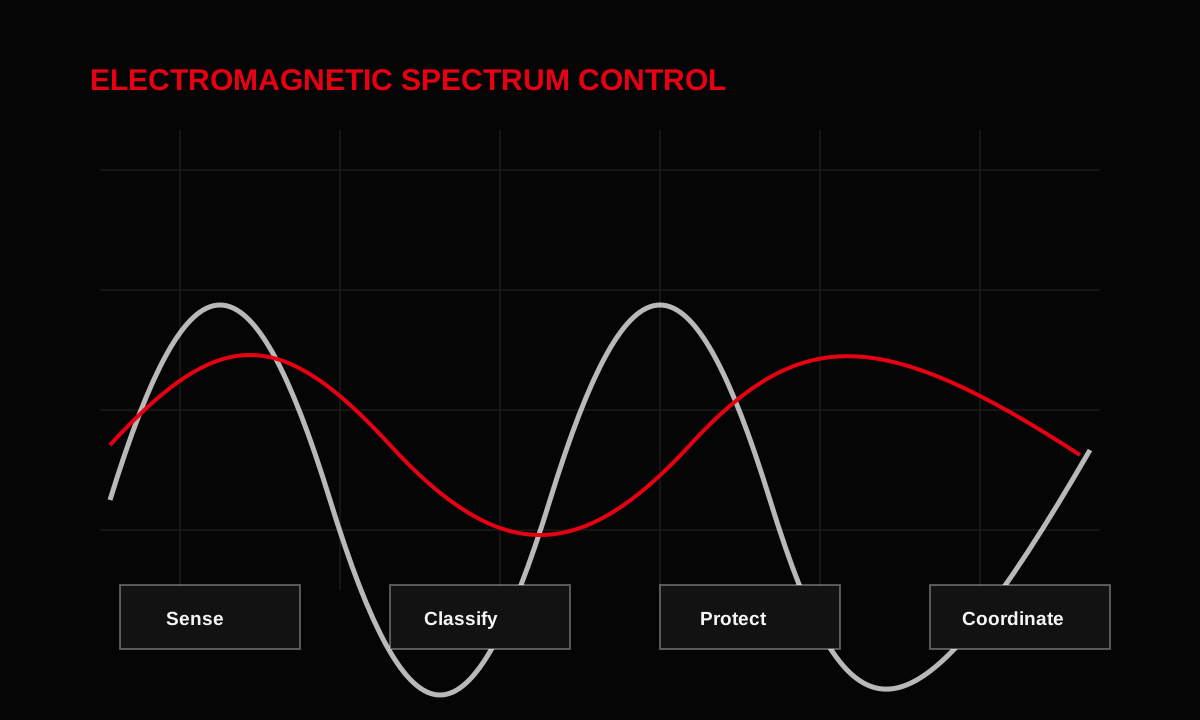
Electronic warfare broadly covers the ability to sense, understand, protect and coordinate use of the electromagnetic environment. In a public and responsible technical article, detailed frequencies, methods or actionable countermeasure procedures should be avoided. The correct approach is to explain high-level concepts such as electronic support, electronic protection and spectrum management while emphasizing the engineering principles that make a system reliable.
Why it matters
Systems deployed in the field cannot rely on physical durability alone. Communications continuity, electromagnetic compatibility, sensor reliability, data integrity and resistance to disruption can directly affect mission continuity. Spectrum awareness is especially important for unmanned systems, mobile command elements and tactical communications networks, where connectivity and timing are part of operational safety.
Technical components
An electronic warfare ecosystem may include antennas, RF front ends, transceiver units, signal processing software, mission computers and operator interfaces. The value of these components is not only their individual performance, but their ability to produce verifiable behavior at system level. During integration, electromagnetic compatibility, power budgets, thermal design and mechanical placement must be considered together.
- Spectrum awareness and situation-picture generation
- Reliable communications and data transfer
- Electromagnetic compatibility inside the platform
- Clear, traceable warning structures for the operator
Limits and responsible language
Electronic warfare is an attractive subject for marketing, but it carries a high sensitivity level. Blog content should not describe operational engagement, activation methods, exploitation techniques or bypass procedures. Instead, the focus should remain on standards-based integration, testability, secure data processing and mission safety. This approach protects institutional reputation while strengthening technical authority.
In short, electronic warfare is not merely a claim of spectrum dominance. Its real value is the ability of a system to continue its mission in a complex electromagnetic environment in a controlled, traceable and dependable manner. For defense companies, the subject requires disciplined engineering and responsible communication.