The defense industry should not be understood only as the production of military platforms or hardware. A modern defense ecosystem combines electronics, embedded software, communications, mechanical design, sensors, test infrastructure, cybersecurity, supply chain control and lifecycle support inside one high-reliability engineering discipline. For that reason, the question “what is the defense industry?” is best answered through capability architecture rather than a product catalogue.
Core definition
The defense industry covers the research, development, production, integration, verification, maintenance and modernization of systems used across land, maritime, air, space and cyber domains. The value of a system is not determined by technical performance alone. Mission fit, sustainability, traceability, documentation quality, compliance with standards and long-term availability are equally critical. For institutional buyers, trust often comes before speed and cost.
Main sectors
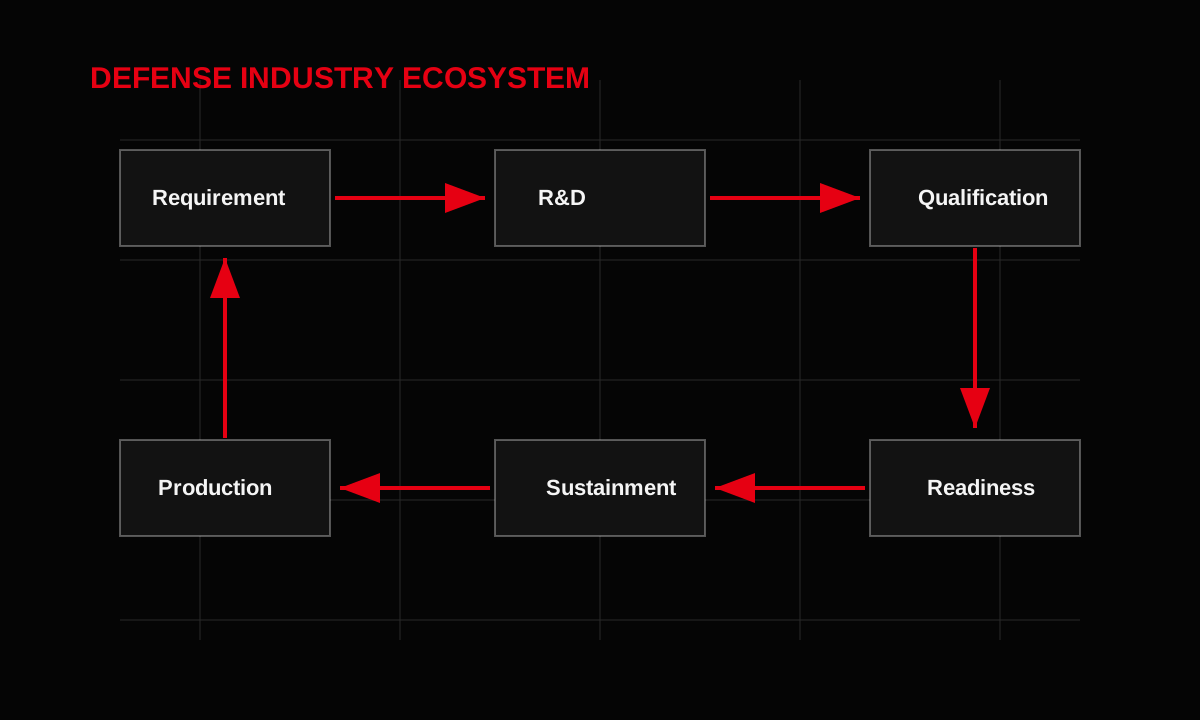
The defense ecosystem includes platform manufacturers, subsystem developers, software teams, test centers, material suppliers and sustainment organizations. An armored vehicle, unmanned system or command-and-control solution is not complete without power distribution, communications, a mission computer, sensor integration, human-machine interfaces and a field maintenance concept. This architectural mindset separates defense programs from conventional industrial production.
Technology areas
Priority technology areas today include unmanned systems, electronic warfare, C4ISR, AI-assisted decision support, cyber resilience, secure communications and open-architecture integration. These subjects must be discussed within public and responsible boundaries. Demonstrating technical authority does not mean disclosing operational tactics or sensitive capabilities. The correct frame is to explain which engineering disciplines make a system dependable.
- Measurable and verifiable requirements
- Controlled management of subsystem interfaces
- Design resilience against environmental conditions
- Test and configuration discipline before serial production
Why institutional trust matters
A defense buyer does not purchase only a product. It purchases mission continuity, documented processes, technical support and risk management. A defense company blog should therefore be structured less like a news feed and more like an indicator of engineering maturity. Content that is precise, disciplined, measured and respectful of standards supports procurement visibility and institutional reputation.
Ultimately, the defense industry is not only the ability to create technology. It is the discipline required to prepare that technology for reliable field use. Strong companies prove their claims not through exaggerated language, but through process maturity, qualification, systems engineering and sustainable support capability.