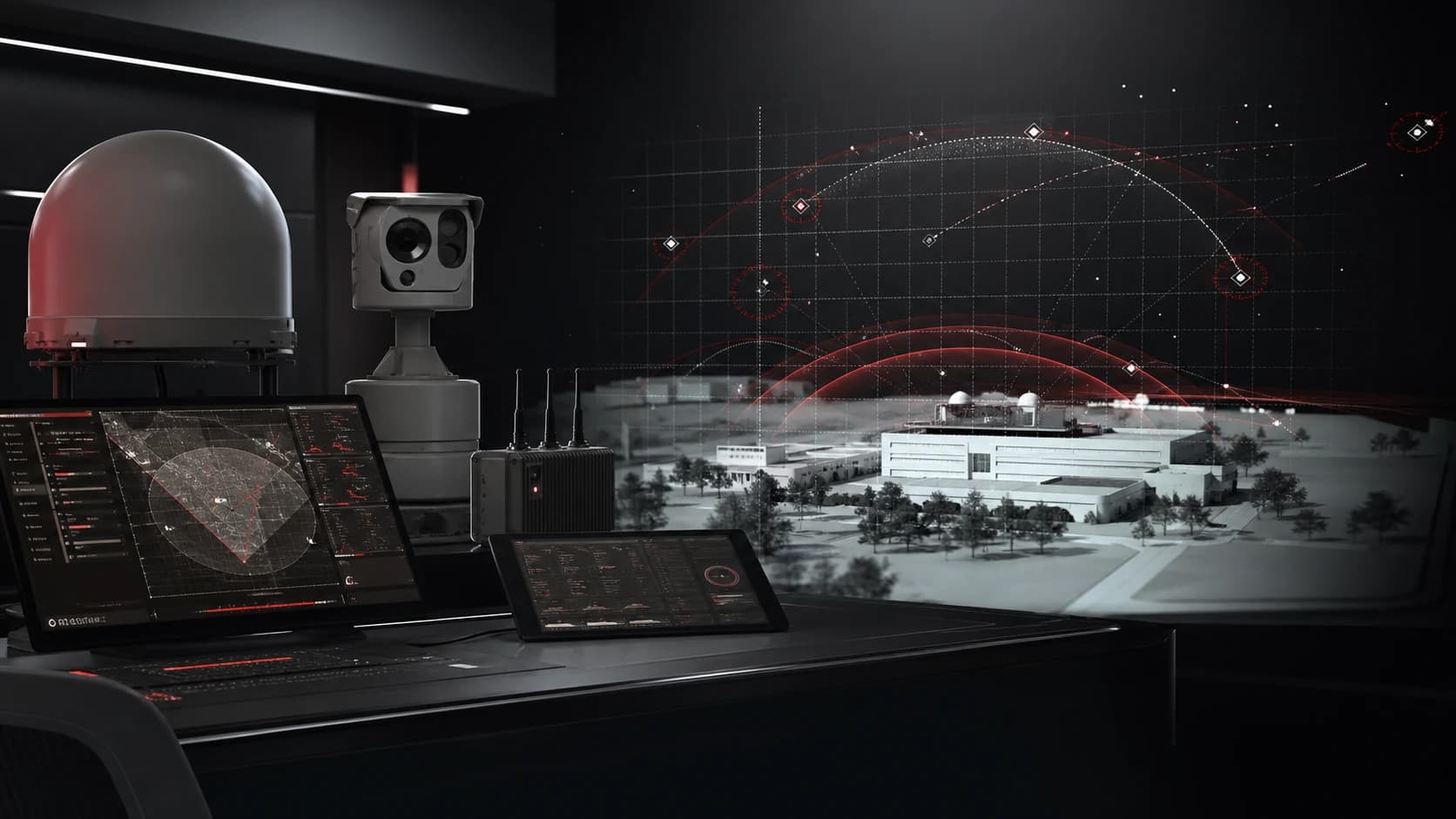
Counter-drone systems are developed to detect, track, classify and support decision-making around unauthorized or risky unmanned aerial vehicles. The field is expanding rapidly, but responsible language is essential. The purpose of a public technical article should not be to describe actionable mitigation procedures; it should explain the engineering layers that allow the system to operate safely and within the relevant legal framework.
Layered awareness
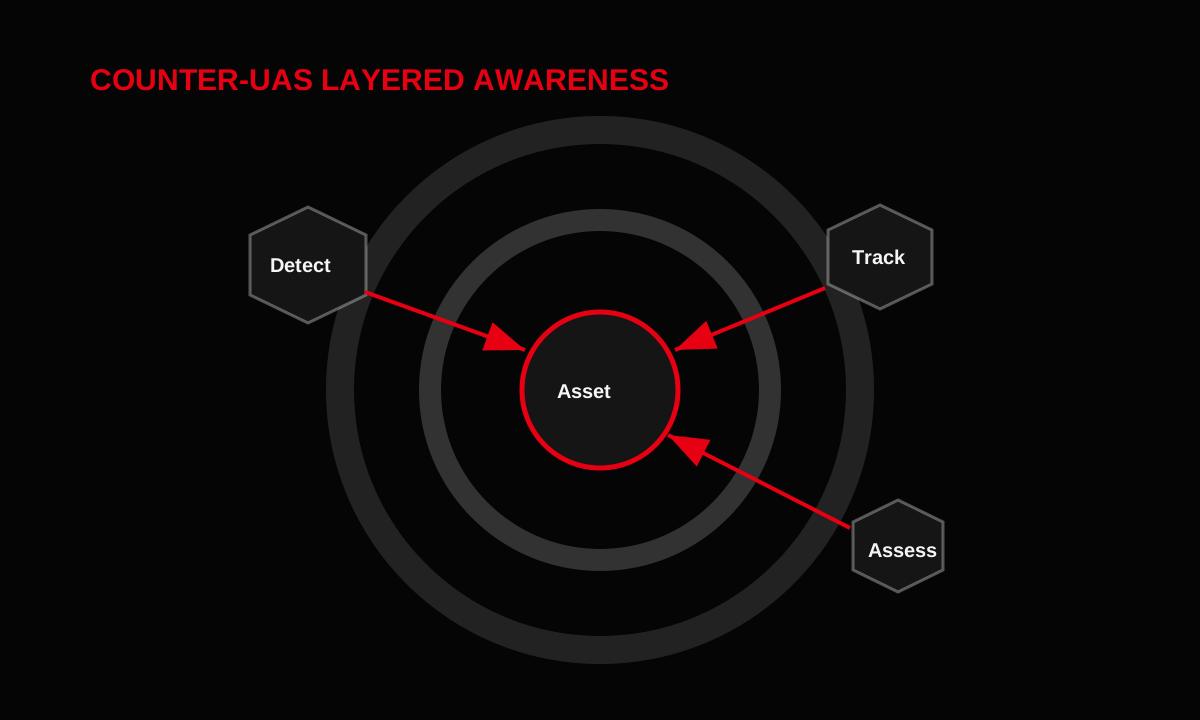
Single-sensor solutions may be sufficient in limited environments, but institutional security and defense applications require layered awareness. Radar, RF sensing, optical systems, acoustic sensors and operator inputs each provide different advantages. When assessed through sensor fusion, these inputs can reduce false alarms and provide a more reliable situation picture to decision makers.
Detection and classification
Detection means recognizing that an object exists. Classification means understanding what type of object it is and how it behaves. Not every small aerial object carries the same risk. The system must provide context to the operator: direction, behavior, environmental conditions and relationship to the protected asset. Automation can support this process, but human supervision remains critical.
Integration criteria
Counter-drone systems usually need to work with existing security infrastructure, command-and-control layers and incident management procedures. APIs, data models, user authorization, logging, alarm prioritization and reporting are therefore as important as sensor performance. A well-designed system does not overwhelm the operator with alarms; it produces prioritized and verifiable information.
- Multi-sensor situational awareness
- False alarm management and traceable records
- Decision support aligned with institutional procedures
- Operational framing that respects legal and safety boundaries
Sensitivity and responsible communication
Topics to avoid include frequencies, vulnerabilities, bypass details, defeat methods and actionable response steps. For a defense company, the right language focuses on detection reliability, integration maturity, operator awareness and controlled mission management. This protects the organization while still demonstrating engineering competence.
In short, a counter-drone system is not merely a collection of sensors. Its real value comes from reliable detection, low false-alarm rates, controlled decision support, auditable processes and integration with the wider security architecture.