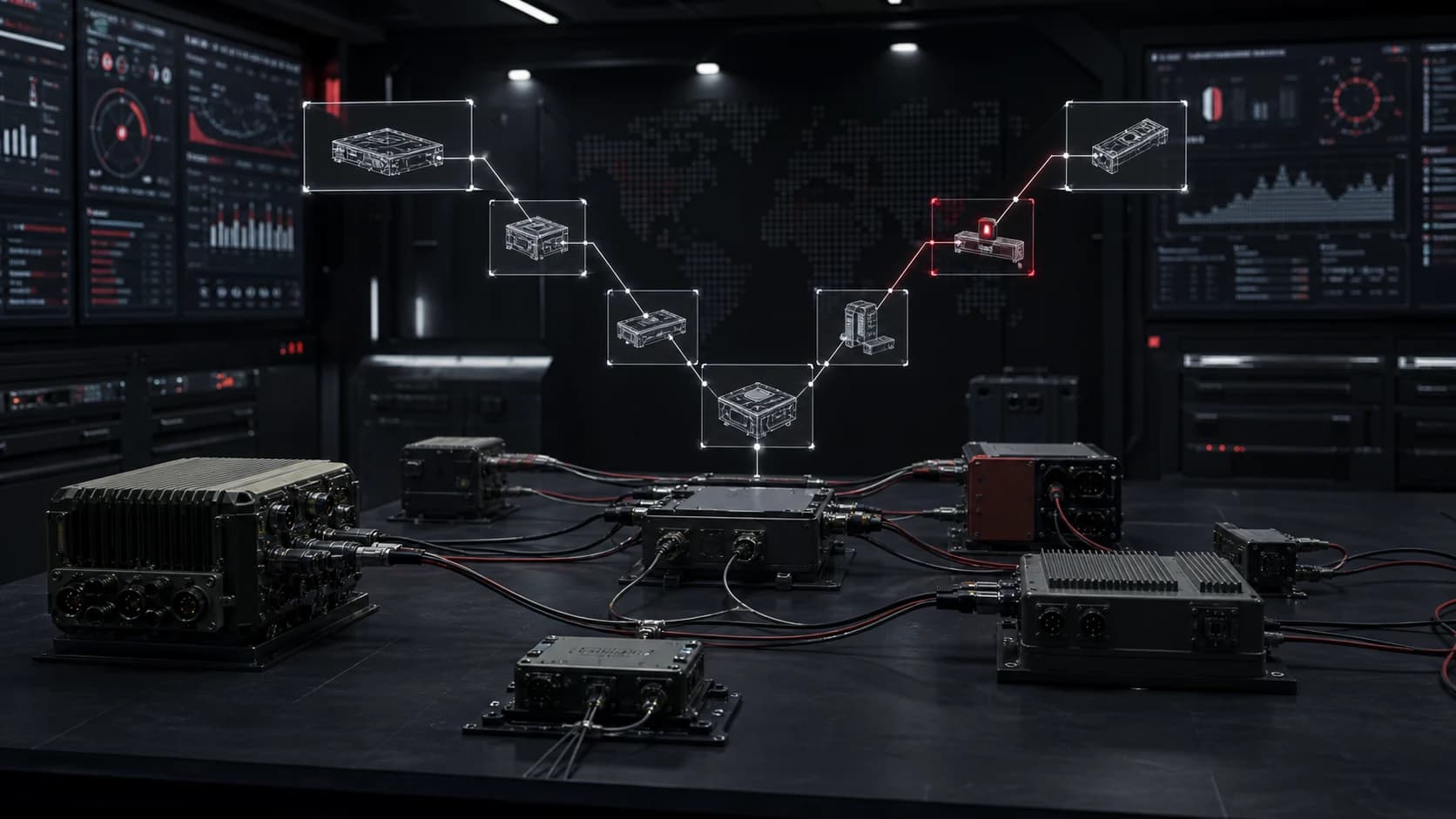
Systems engineering in defense projects ensures that a complex solution is managed from mission need to technical requirements, from design to verification, and from fielding to sustainment. When platform, software, electronics, mechanics, communications and human-machine interfaces converge inside one product, success depends on system-level coherence rather than the strength of a single discipline.
Role of systems engineering
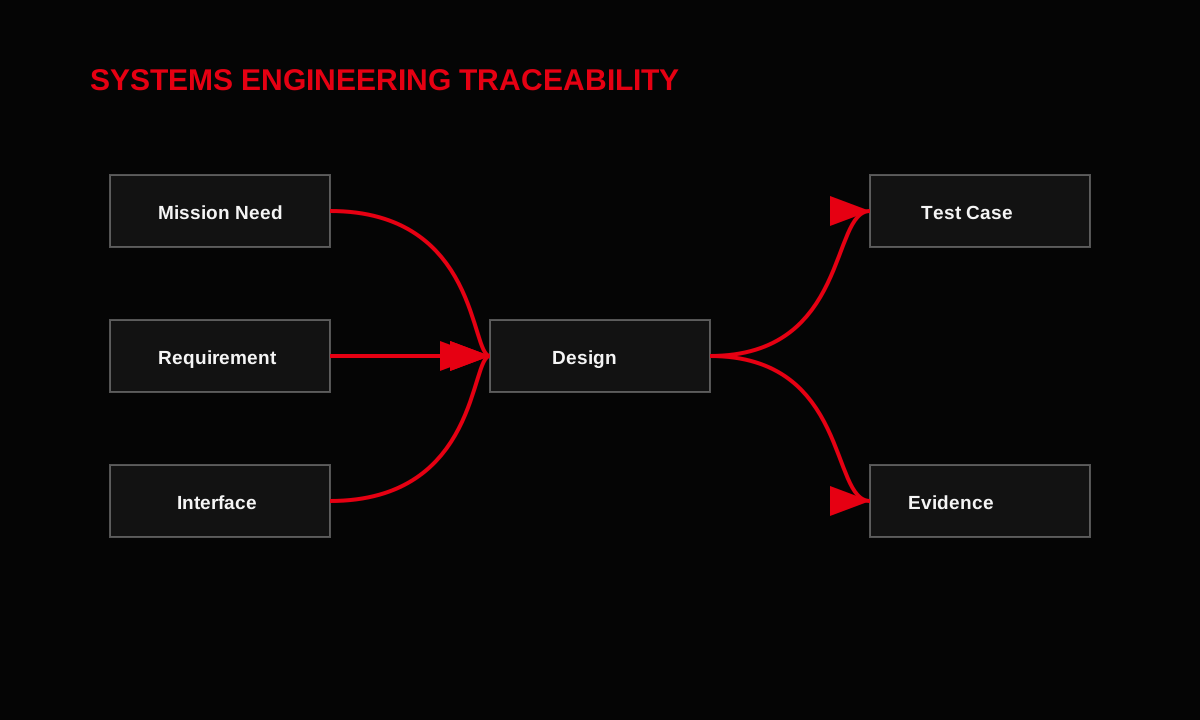
Systems engineering turns the question “what must be achieved?” into measurable requirements. Requirements must be verifiable, traceable and non-conflicting. Interfaces are then defined, subsystem responsibilities are decomposed and verification methods are planned. This discipline prevents uncontrolled technical growth as the project matures.
Interface management
One of the most critical risks in defense systems is interface ambiguity. The power need of an electronic board, the thermal impact of mechanical placement, the software data model, communications latency and operator workflow must be considered together. Interface control documents are therefore not bureaucratic overhead; they are tools for reducing technical risk.
Verification and validation
Verification shows whether the system meets defined requirements. Validation assesses whether the system is suitable for the real mission need. In defense projects, these concepts must be separated. A product may pass individual test items, yet still be immature if it increases operator workload or cannot be maintained sustainably in the field.
- Traceability from requirement to test evidence
- Controlled and documented management of interfaces
- Recording of configuration changes
- Inclusion of lifecycle support in design decisions
Institutional value
Systems engineering capability shows that a defense company is not merely producing parts, but developing mission-fit solutions. Explaining this discipline in blog content is valuable for procurement and tender visibility because institutional buyers want to see how technical risk is managed in complex programs.
In conclusion, systems engineering is the technical backbone of defense projects. It brings product performance, reliability, testability and sustainability under one disciplined management approach.