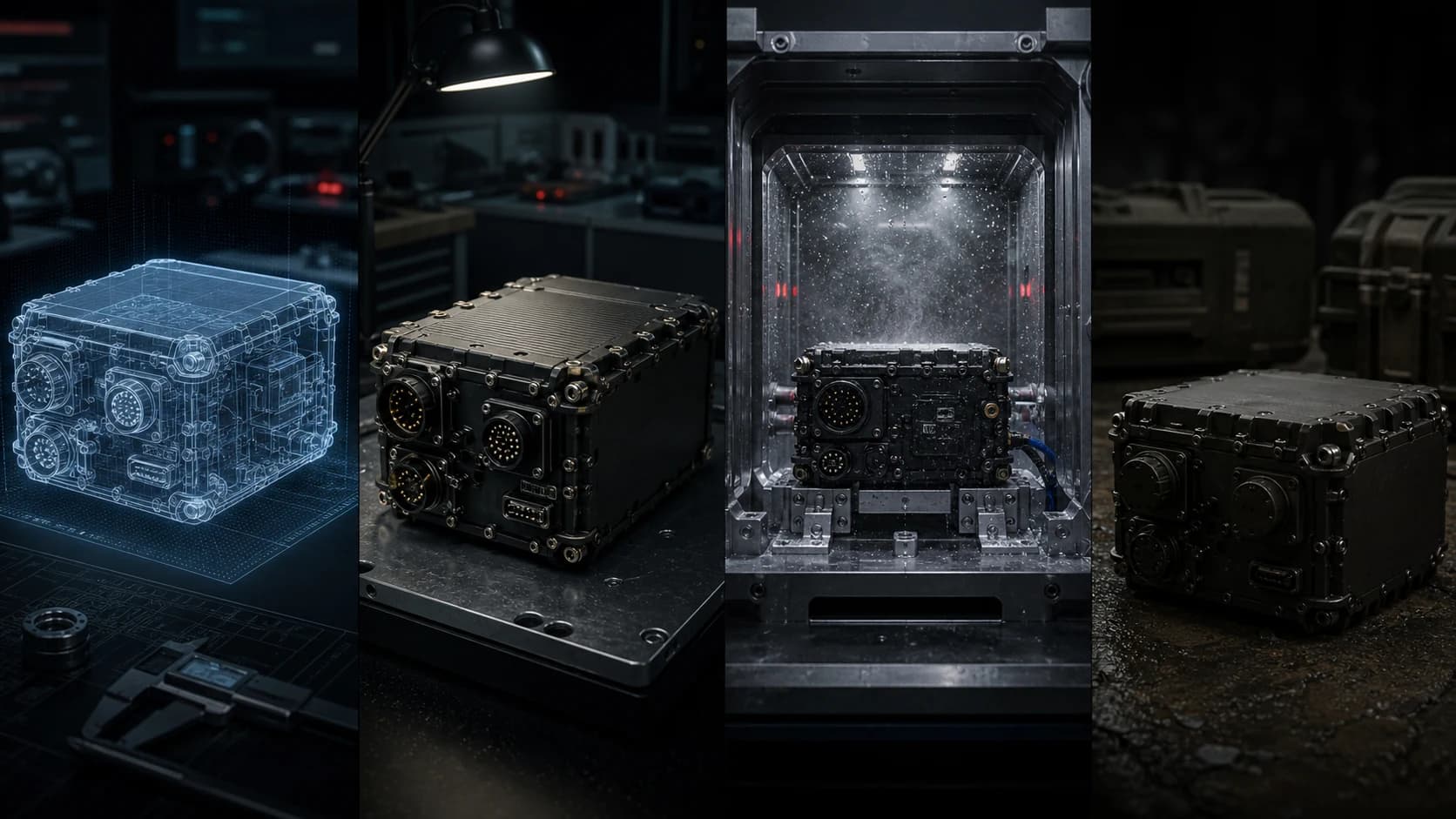
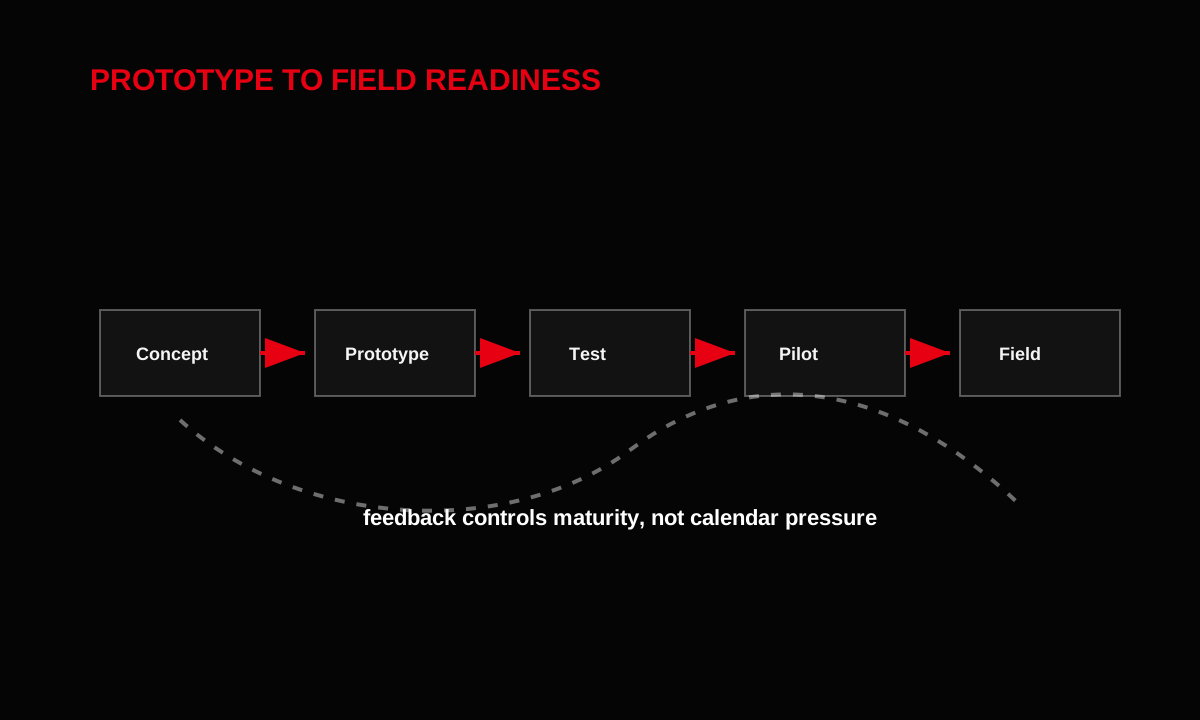
Defense product development is not merely the act of turning an idea into a prototype quickly. Real success is achieved when the prototype passes controlled tests, is validated in mission context, becomes producible and can be supported throughout its field life. The transition from prototype to field therefore requires technical maturity, documentation, qualification and lifecycle planning.
Concept and requirements
The first phase is to define the mission need. What problem will be solved, what environment will the product operate in, what constraints apply and how will success be measured? Unclear requirements create costly design changes later. In defense programs, requirement quality is the starting point of product quality.
Prototype development
A prototype is not only a demonstration object; it is a learning platform. Electronic boards, mechanical housing, embedded software, communications interfaces and payloads are tested together. The purpose is to expose technical risks early. Prototype success does not mean the final product is ready; it means the right questions can now be answered with better evidence.
Test and verification
Tests approaching field conditions are a core indicator of product maturity. Vibration, temperature, humidity, power fluctuation, communications constraints and user scenarios must be evaluated in a planned manner. Test results should be documented in enough detail to feed design decisions, not reduced to a simple pass-or-fail statement.
- Concept verification and technical risk reduction
- Interface and integration control on the prototype
- Mission-context feedback through pilot use
- Early evaluation of producibility and maintainability
Field readiness
Before a product is fielded, configuration management, spare-part planning, technical documentation, user training, maintenance procedures and update management must be prepared. For a defense buyer, the first delivery matters, but supportability five years later matters as well. Lifecycle support should therefore be planned at the beginning, not added at the end.
In short, defense product development balances speed and reliability through disciplined engineering. A field-ready product is one whose performance has been demonstrated, whose limits are known, whose documentation is controlled and whose sustainment structure is ready.