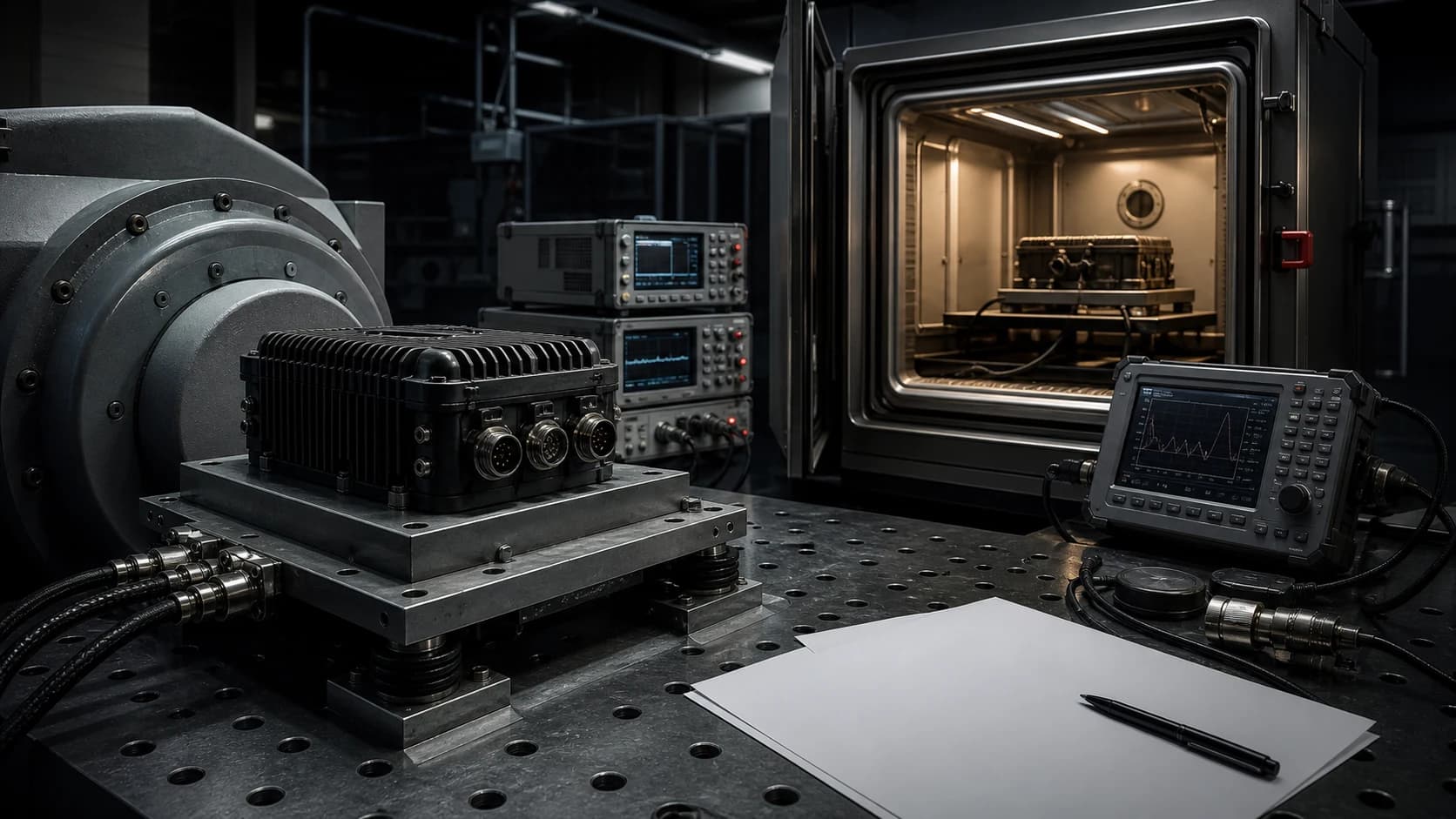
Military standards are reference frameworks used to ensure that defense systems behave reliably under defined environmental conditions, interface rules and verification disciplines. Standards such as MIL-STD and NATO STANAG are not universal recipes applied identically in every project. They must be interpreted together with the mission profile, platform type, operating environment and customer specification.
Purpose of standards
Standards create a common technical language. Vibration, temperature, humidity, shock, electromagnetic compatibility, documentation and interoperability become measurable topics. This allows suppliers, prime contractors and customers to work from the same expectation set. Standards affect not only testing, but also design decisions.
MIL-STD and STANAG
MIL-STD documents generally refer to technical test, environmental resilience or process references used in U.S. military systems. STANAG documents are NATO standardization agreements that define interoperability and common implementation principles among member nations. A project must clearly define which standard, section and test level applies through its technical specification.
Qualification process
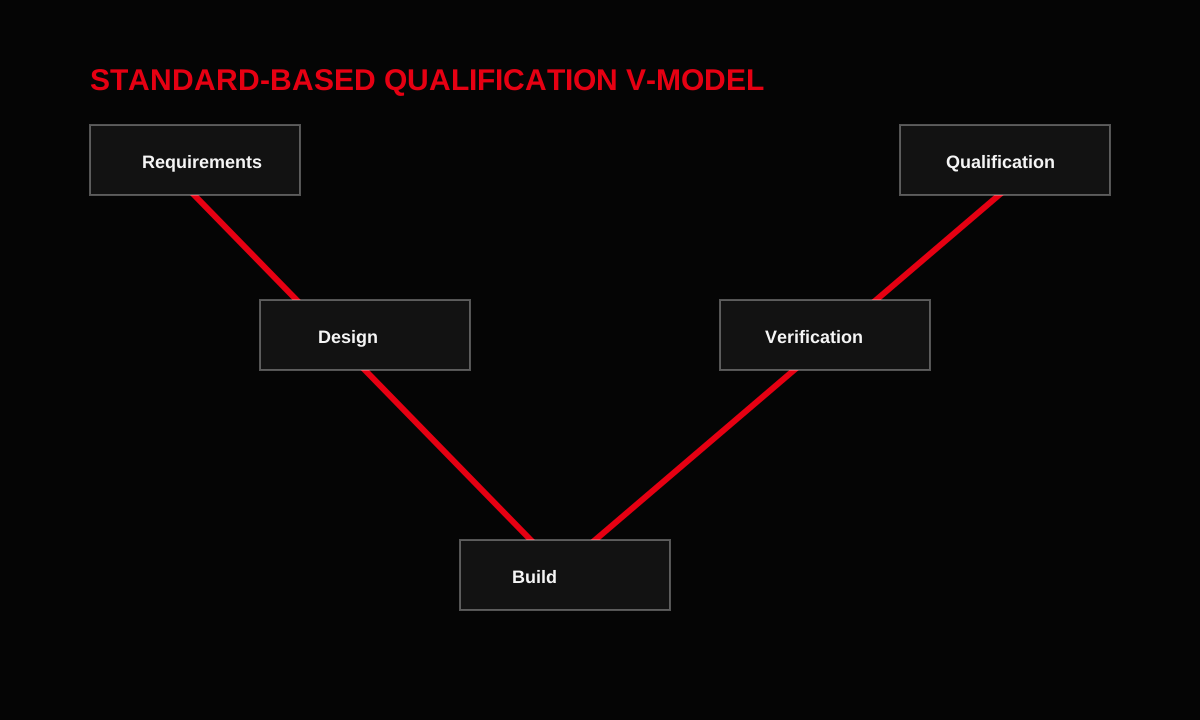
Qualification is the controlled verification process used to prove that a product meets defined requirements. It includes test plans, test procedures, sample configuration, measurement methods, acceptance criteria, reporting and nonconformance management. Passing a test is important, but the test must also be traceable and repeatable.
- Mapping requirements to standard clauses
- Recording sample configuration and test conditions
- Defining measurable acceptance criteria
- Documenting test results as technical evidence
Why standards must be addressed early
If standards are considered only after design is complete, cost, schedule and technical risk increase. Environmental resilience, thermal management, connector selection, cable routing, mechanical attachment and electronic board layout should be evaluated against standard targets from the beginning. This makes the transition from prototype to serial production more controlled.
Military standards are therefore not merely certification labels. When used correctly, they strengthen design discipline, increase procurement confidence and create the technical evidence chain showing that a system is ready for its intended environment.