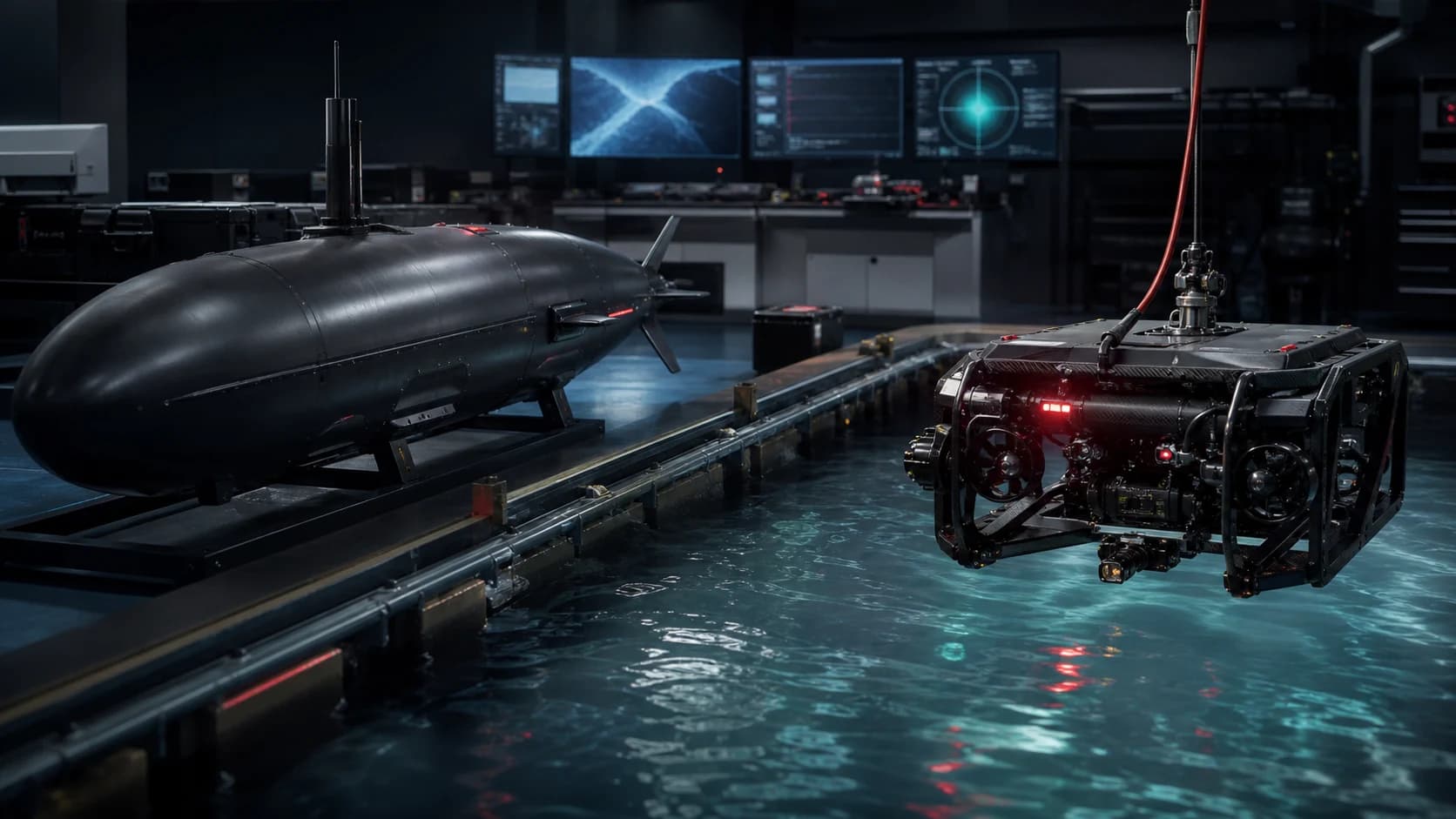
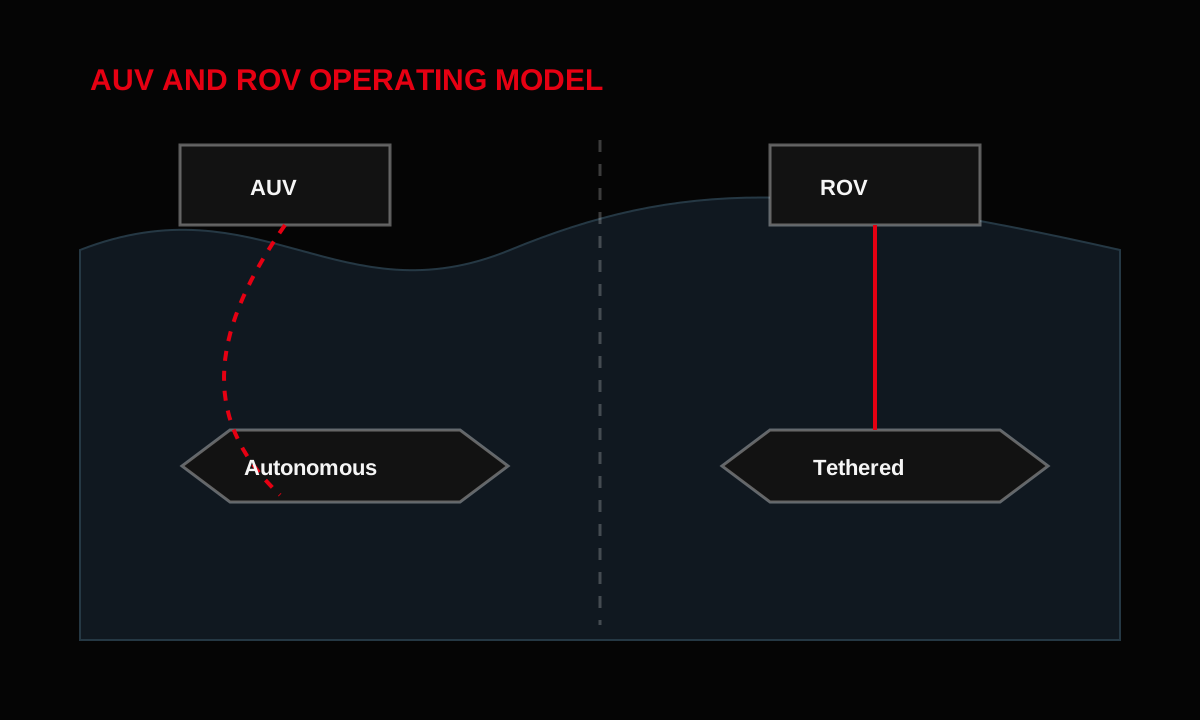
AUV and ROV represent two different unmanned-system approaches for underwater missions. AUV stands for Autonomous Underwater Vehicle and focuses on executing defined missions independently and without a physical control line. ROV stands for Remotely Operated Vehicle and is typically controlled by an operator through a tether or cable. Although both systems operate underwater, their mission design, risk profile and integration logic are different.
Control and communications
ROV systems remain closer to direct operator control. A tether can provide real-time video, power or data connectivity, making ROVs suitable for close inspection, intervention and detailed observation. AUV systems execute missions without continuous physical connection, so route planning, energy management, navigation accuracy and post-mission data analysis become more critical.
Mission profile
AUVs are often preferred for wide-area survey, mapping, environmental data collection and preplanned missions. ROVs are stronger for port inspection, underwater structure assessment, maintenance observation and tasks requiring real-time operator judgment. In defense and critical infrastructure contexts, the choice should be based not only on specifications but also on mission duration, depth, data requirements, safety constraints and maintenance capacity.
Technical evaluation criteria
The underwater environment is difficult for communications, positioning and energy. RF signals behave poorly underwater; acoustic communications must be evaluated with bandwidth and latency limitations in mind. AUV design therefore emphasizes inertial navigation, mission planning and sensor fusion. ROV design emphasizes tether management, operator interface quality, camera and lighting performance, and mechanical durability.
- AUV: independent mission execution, wide area coverage, energy optimization
- ROV: real-time control, close inspection, high operator awareness
- Shared requirements: pressure resistance, sealing, reliable logging and maintenance access
Which one is more suitable?
There is no technically superior system in absolute terms; there is a system better suited to the mission. AUVs are appropriate when a wide area must be surveyed systematically. ROVs are appropriate when precise observation and operator direction are required. In mixed missions, both approaches may be used together, but integration and data standardization should be planned from the beginning.
The difference between AUV and ROV is therefore not only cable versus no cable. It is a difference in control philosophy, risk management, data flow and mission maturity.